
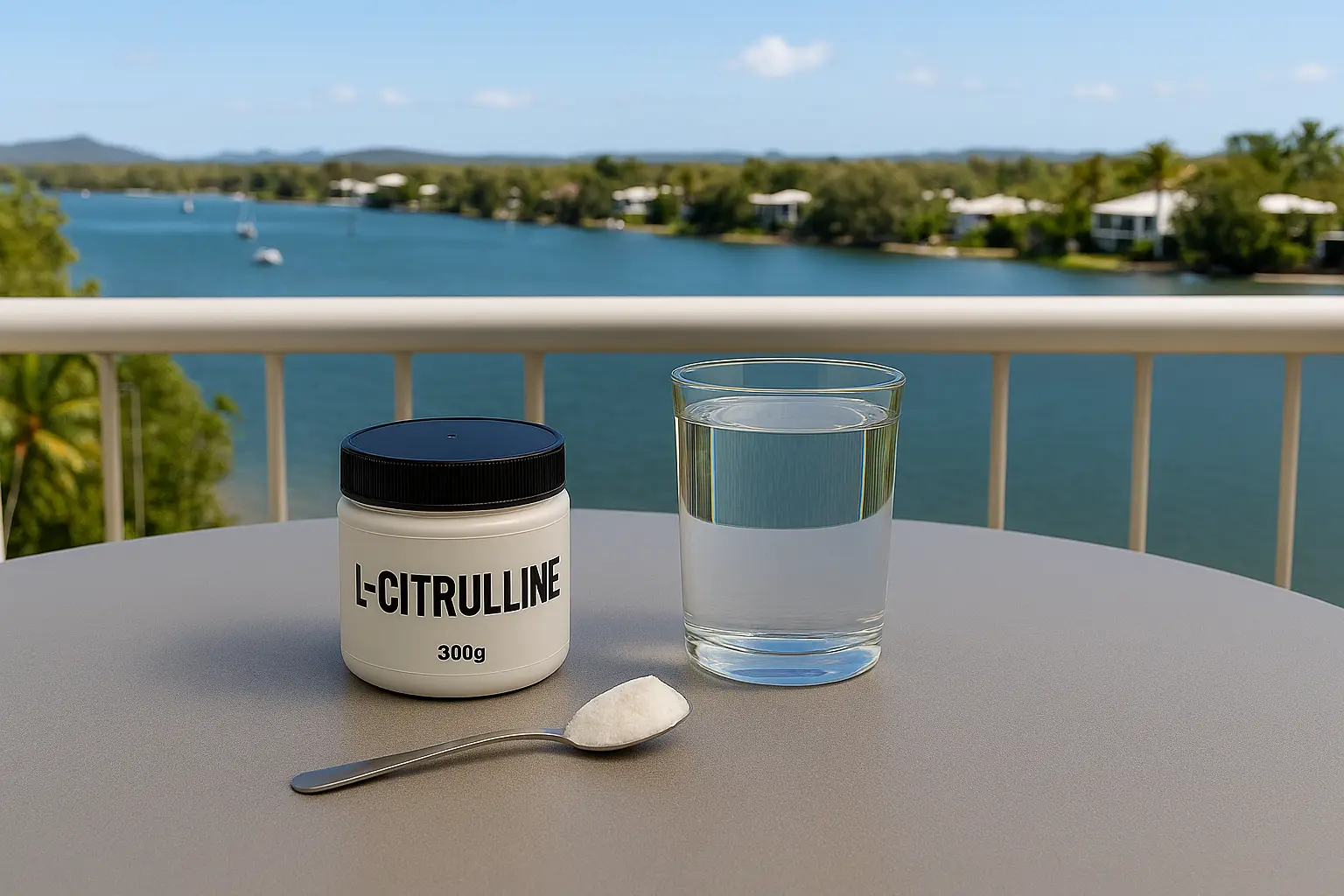

Why is L-citrulline in pre-workout supplements, read through the below and you’ll find out why this ingredient is a no-brainer in any high level pre workout formula. If you’ve ever scanned the label of a pre-workout supplement, chances are you’ve seen L-citrulline listed among the key ingredients, often right near the top. But what exactly is it, and why do so many high-performance formulas rely on it? As a naturally occurring amino acid, L-citrulline plays a pivotal role in boosting nitric oxide production, which helps widen blood vessels, improve circulation, and deliver more oxygen and nutrients to working muscles. In short: it helps you train harder, recover faster, and feel less fatigued.
Whether you’re chasing a better pump, enhanced endurance, or quicker recovery between sets, L-citrulline has become a go-to for athletes and gym-goers alike. It’s not just hype — there’s solid science behind its inclusion in most modern pre-workouts. In this post, we’ll break down how it works, what the research says, and how to spot the right dose on your supplement label so you can get the most out of your training.
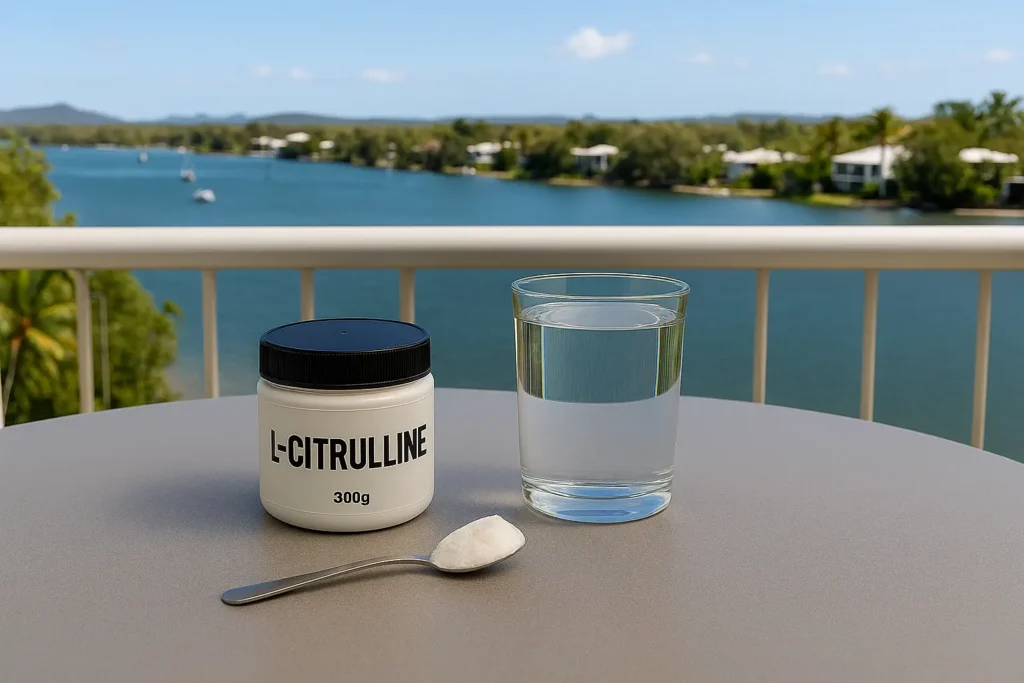
What is L-citrulline?
L-citrulline is a non-essential amino acid, meaning your body can produce it on its own. It was first discovered in watermelon (hence the name, derived from Citrullus, the Latin word for watermelon). Unlike essential amino acids, you don’t need to get it exclusively from food, but supplementation can provide benefits beyond your body’s natural levels.
Once consumed, L-citrulline is converted into another amino acid called L-arginine. This leads to an increase in nitric oxide production, which is where the real performance benefits kick in.
Why is L-citrulline in pre-workout supplements?
One of the main reasons why L-citrulline in pre-workout supplements works is it supports better blood flow and endurance. Here’s what it does:
- Boosts nitric oxide levels – More nitric oxide means wider blood vessels (vasodilation), improving circulation during exercise.
- Enhances the “muscle pump” effect – That tight, full feeling you get in the gym is partly due to improved blood flow, and L-citrulline helps amplify it.
- Improves nutrient delivery – With better circulation, oxygen and nutrients reach your muscles more efficiently, helping performance and recovery.
- Reduces fatigue – Some studies suggest L-citrulline helps reduce muscle soreness and delay the onset of fatigue, making tough sessions feel more manageable.
How does L-citrulline work in the body?
When you supplement with L-citrulline, your body converts it into L-arginine in the kidneys. From there, L-arginine is used to boost nitric oxide (NO) production.
Nitric oxide is a signalling molecule that tells your blood vessels to relax and expand. The result? Improved circulation and blood flow, which is why it’s particularly popular for endurance athletes and strength trainers alike.
Interestingly, L-citrulline supplementation is often more effective than taking L-arginine itself. That’s because L-arginine is broken down quickly in the digestive system, while L-citrulline is absorbed more efficiently, making it a more reliable choice.
Typical dosages of L-citrulline in pre-workout supplements
Most pre-workouts include 6–8 grams of pure L-citrulline or 8–10 grams of citrulline malate (a form that combines citrulline with malic acid for added endurance benefits). This is considered an effective dose for improving blood flow and performance.
If you’re comparing pre-workout supplements, check the label carefully, some of the budget-friendly options may underdose on citrulline, making them less effective.
Food sources of L-citrulline
While supplementation is the easiest way to reach performance-focused levels, L-citrulline is naturally present in a few foods:
- Watermelon (highest source)
- Cucumbers
- Squash
- Pumpkins
These foods provide small amounts, but not enough to deliver the same workout benefits as a concentrated supplement.
Who benefits most from L-citrulline?
L-citrulline is versatile and useful for a wide range of fitness goals, and this is why many supplement brands put L-citrulline in pre-workout supplements.
- Strength trainers – For enhanced pumps and better nutrient delivery.
- Endurance athletes – To improve blood flow and oxygen delivery.
- Beginners – To reduce early workout fatigue and support consistency.
- Anyone chasing recovery – To help reduce post-workout soreness.
Key takeaways
L-citrulline has become a go-to pre-workout ingredient for good reason. By boosting nitric oxide production, it improves circulation, enhances pumps, supports endurance, and may even reduce soreness.
If you’re shopping for a pre-workout, it’s worth checking the label to make sure you’re getting a clinically effective dose of L-citrulline. And if you want to dive deeper, be sure to explore some of Protein Guy’s other ingredient breakdowns and product reviews to see how it stacks up alongside creatine, beta-alanine, and other popular pre-workout ingredients.
