


DOMS explained for you, this post explains what DOMS is, why it happens, and how you can manage it so it doesn’t derail your training.
If you’ve ever hit the gym hard and found yourself struggling to walk down the stairs the next day, you’ve experienced DOMS (delayed onset muscle soreness). It’s a common experience for athletes and everyday gym-goers alike, and while it can be frustrating, it’s also a natural part of building strength and endurance.
DOMS explained, what is DOMS?
DOMS (delayed onset muscle soreness) is the stiffness and tenderness you feel in your muscles after intense or unfamiliar exercise. It usually kicks in 12–24 hours post-workout and can peak around 48 hours, lingering up to three days in some cases.
It’s not the same as acute muscle pain or injury. DOMS is more of a dull ache or tightness, a sign your muscles are adapting to the stress of training.
Why does DOMS happen?
DOMS occurs because of microscopic damage to muscle fibres during exercise, particularly when you do eccentric movements (lengthening under tension, like lowering a squat or running downhill). This triggers an inflammatory response as your body repairs and strengthens the affected tissue.
In short: those sore muscles mean your body is working to rebuild stronger.
Common symptoms of DOMS
Before you jump to conclusions about whether it’s DOMS or something more serious, here are the tell-tale signs:
- Muscle stiffness and tightness that develops hours after training
- Tenderness when touching or stretching the muscle
- Temporary loss of strength in the affected muscle groups
- Reduced range of motion
- Soreness that peaks within 1–2 days after exercise
If you experience sharp or sudden pain during exercise, or swelling/bruising after, that’s not DOMS, it may be an injury and needs medical attention.
How to manage DOMS
DOMS explained simply: it’s a natural part of the muscle repair process, not a sign that something’s gone wrong. While you can’t completely avoid delayed onset muscle soreness, especially after intense or unfamiliar workouts—there are smart strategies to make it more manageable. From active recovery and hydration to targeted nutrition and mobility work, the goal isn’t to “cure” soreness but to support your body’s healing so you can return to training stronger and more prepared.
Instead of viewing DOMS as a setback, think of it as feedback. It’s your body adapting, rebuilding, and laying the groundwork for future performance. With the right recovery tools and mindset, DOMS becomes less of a roadblock and more of a signal that progress is underway.
1. Stay active with light movement
Gentle activity like walking, cycling, or yoga helps increase blood flow to sore muscles, speeding up recovery.
2. Prioritise nutrition
Protein plays a crucial role in repairing muscle fibres. Carbohydrates help restore glycogen, and healthy fats can assist with inflammation. Consider a protein shake after workouts to kickstart recovery.
3. Hydrate well
Dehydration can make soreness feel worse. Keeping fluid intake high supports nutrient delivery and muscle repair.
4. Stretching and mobility work
Gentle stretching or mobility exercises can ease tightness and improve range of motion. Avoid overly aggressive stretching, it can make soreness worse.
5. Rest and sleep
Recovery happens when you rest. Aiming for 7–9 hours of sleep allows your body to repair muscle damage more effectively.
6. Try recovery aids
Foam rolling, massage, hot/cold showers, and even compression gear can provide temporary relief and improve circulation.
Stretching, mobility tools and recovery aids that can help
One of the best ways to reduce the intensity of DOMS and improve recovery is by focusing on stretching and mobility work. Using the right tools can make it easier to loosen tight muscles, increase blood flow, and maintain flexibility between training sessions.
Here are a few helpful options you can find on Amazon:
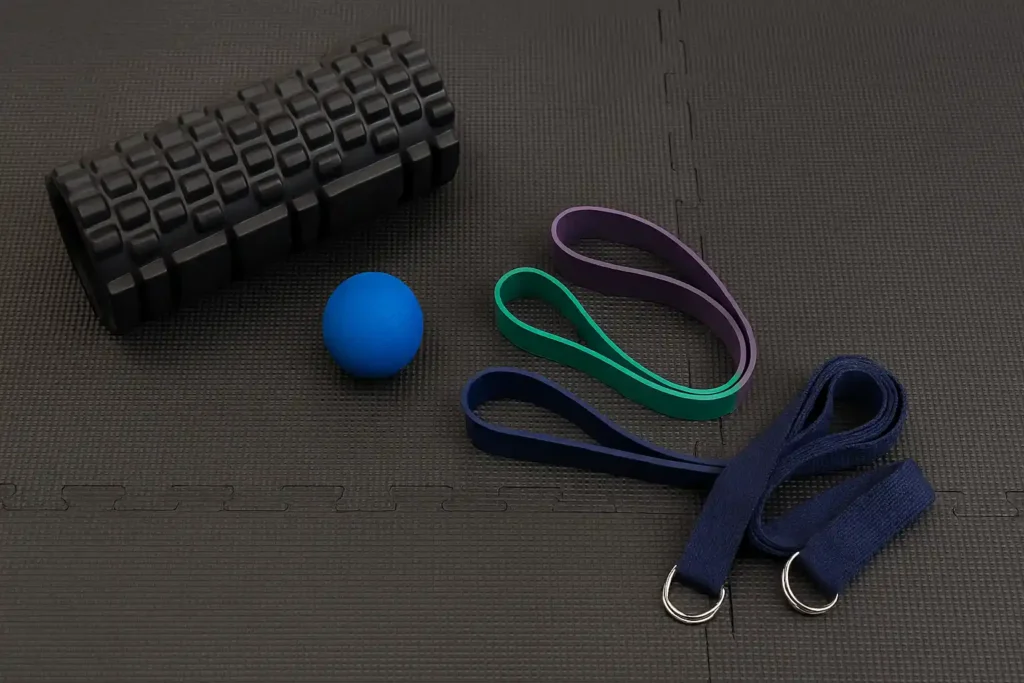
- Foam Roller – Great for self-myofascial release, helping to ease tension and improve circulation. Shop foam rollers on Amazon
- Massage Ball / Lacrosse Ball – Ideal for targeting smaller or hard-to-reach muscle groups like calves, glutes, or shoulders. Shop massage balls on Amazon
- Resistance Bands – Useful for dynamic stretching and mobility drills to keep joints moving smoothly. Shop resistance bands on Amazon
- Stretching Strap – Assists with deeper stretches and improving range of motion safely. Shop stretching straps on Amazon
As an Amazon Associate, I earn from qualifying purchases, which helps support the content we create for you.
Can DOMS be prevented?
Not entirely, but you can help to reduce DOMS severity:
- Progress gradually: Increase workout intensity or volume slowly, especially if trying a new program.
- Warm up properly: Preparing muscles before training reduces stress on them.
- Cool down: Light movement post-workout helps flush waste products and keeps blood moving.
- Consistent training: The more regularly you train, the less extreme DOMS tends to be over time.
When DOMS might not be normal
While DOMS is common, you should seek advice from a health professional if:
- Pain lasts longer than 3–4 days
- Swelling or bruising appears
- The pain is sharp, sudden, or localised
- Weakness continues well beyond normal soreness
These may be signs of a strain, tear, or other injury rather than simple post-workout soreness.
Key takeaways
Understanding DOMS or delayed onset muscle soreness, is key to managing it effectively. It’s not something to fear, but rather a normal part of the muscle-building process that signals your body is adapting and getting stronger. While the discomfort can be real, it’s also temporary and manageable with the right recovery habits.
By fuelling your body with quality nutrition, staying gently active, and prioritising rest, you can keep DOMS in check without losing momentum in your training. Think of it as a sign of progress, not punishment — and with a smart approach, it becomes just another step in your journey toward strength and resilience.
If you enjoyed this DOMS explained article, and are looking for more practical tips on recovery and performance, explore other Protein Guy Performance posts that break down the science of training into easy-to-apply strategies.
