
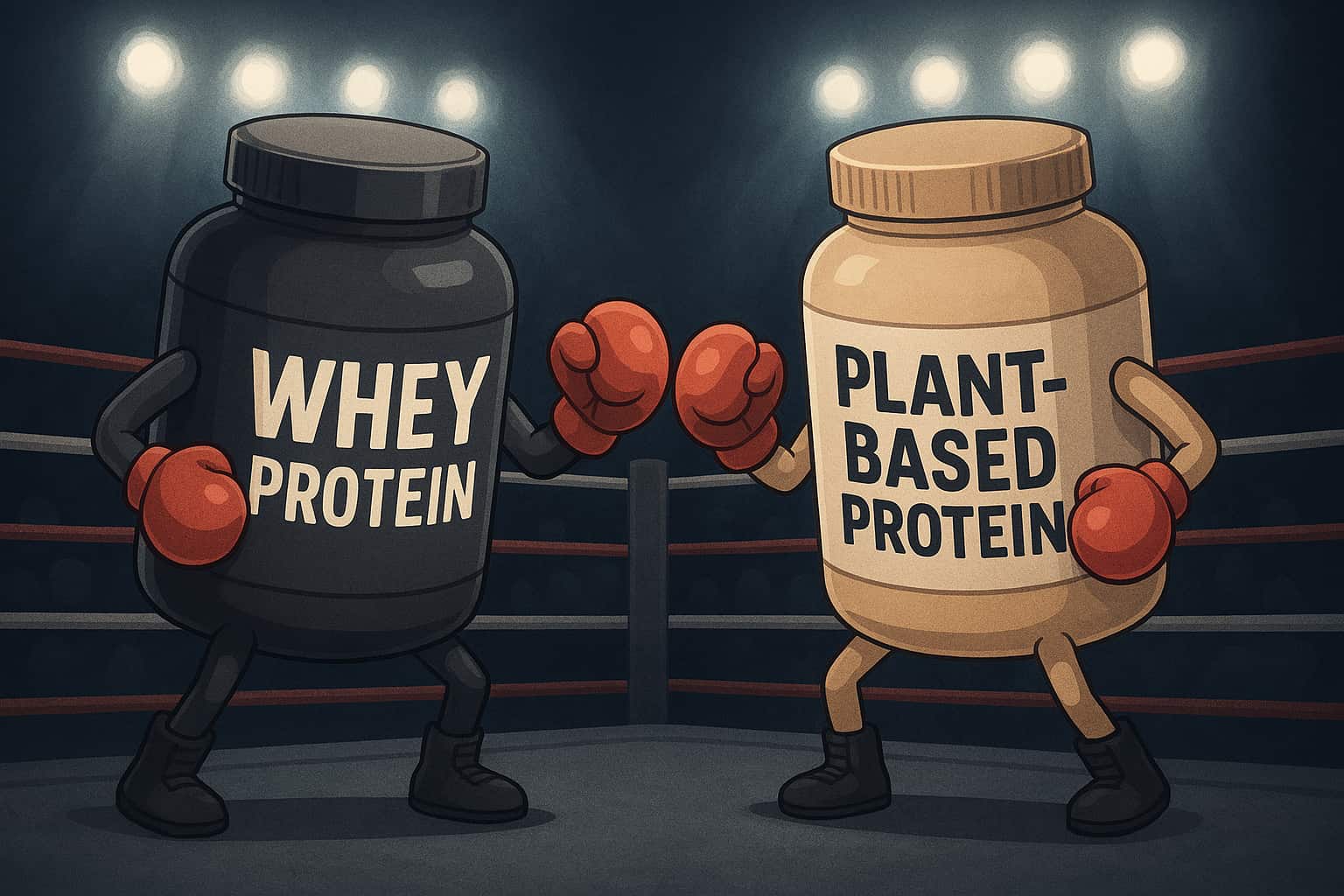

When it comes to building muscle, recovering after workouts, or simply meeting daily protein needs, one of the most common questions is plant vs whey protein: which is better for your goals? Both types of protein powders are popular choices, but they have different nutritional profiles, digestibility factors, and benefits that may make one a better fit depending on your diet and lifestyle.
In this guide, we’ll break down the differences between whey and plant protein, compare their pros and cons, and help you decide which one suits your fitness and nutrition goals best.
What is whey protein?
Whey protein is derived from milk during the cheese-making process. It’s a complete protein, meaning it contains all nine essential amino acids your body needs for muscle growth, repair, and overall health. Whey is particularly high in leucine, the amino acid most closely linked to stimulating muscle protein synthesis.
It’s fast-digesting, which makes it a go-to option for post-workout shakes, and comes in different forms such as whey concentrate, whey isolate, and whey hydrolysate. Each form varies slightly in terms of processing, protein content, and digestion speed.
What is plant protein?
Plant protein powders are made from sources such as peas, brown rice, hemp, soy, or a blend of multiple plants. Unlike whey, some plant proteins are not complete proteins on their own, but manufacturers often combine sources (like pea and rice) to cover all essential amino acids.
Plant protein is typically slower-digesting than whey, which can make it more filling and supportive of longer-lasting satiety. It’s also naturally dairy-free, vegan-friendly, and often easier to digest for people who are lactose intolerant or sensitive to dairy products.
Side-by-side comparison: plant vs whey protein
Here’s how plant vs whey protein compare across the most important factors:
| Factor | Whey Protein | Plant Protein |
|---|---|---|
| Source | Derived from milk (dairy) | Derived from peas, rice, soy, hemp, or blends |
| Amino acid profile | Complete protein with high leucine | Complete if blended (e.g., pea + rice) |
| Digestibility | Fast-absorbing, great for post-workout | Slower-digesting, better for satiety |
| Allergens | Contains lactose (some forms lower in lactose) | Dairy-free, vegan, hypoallergenic |
| Muscle-building | Excellent due to high leucine content | Effective if blended for completeness |
| Gut health | Can cause bloating in lactose-sensitive people | Often easier on digestion |
| Sustainability | Higher environmental footprint | Generally more eco-friendly |
| Taste & texture | Smooth, creamy taste | Can be grainy, earthy depending on brand |
Benefits of whey protein
Whey protein’s biggest advantage lies in its fast absorption and leucine content, which makes it highly effective for building lean muscle mass. Studies consistently show that whey outperforms many other protein types when it comes to muscle recovery and growth.
It’s also widely available, comes in many flavours, and mixes well into shakes or recipes. For athletes and bodybuilders looking to maximise performance and recovery, whey is often the first choice.
Benefits of plant protein
Plant protein shines when it comes to dietary inclusivity and digestibility. It’s suitable for vegans, vegetarians, and those who are lactose intolerant. Many plant-based protein blends are fortified with added amino acids to match whey’s profile, making them just as effective for supporting muscle growth when consumed in adequate amounts.
Plant protein also supports overall health by providing fibre, antioxidants, and minerals from its natural sources, something whey protein lacks. Environmentally conscious consumers also appreciate that plant protein production typically has a lower carbon footprint.
Which is better for muscle growth?
If your main goal is building muscle quickly and efficiently, whey protein has the edge due to its high leucine content and rapid absorption. This is why many athletes use whey protein immediately after training.
However, studies show that plant protein can still deliver similar results over time, as long as you consume enough total protein and ensure it has a complete amino acid profile. Blends like pea and rice protein are especially effective.
Which is better for weight loss?
When it comes to weight management, both options can be effective. Whey protein helps preserve muscle while in a calorie deficit, while plant protein’s slower digestion and added fibre may help you feel fuller for longer.
If you’re prone to cravings or overeating, plant protein may be more supportive. If your main focus is maintaining lean muscle while cutting weight, whey protein may be slightly better.
Choosing the right protein for your goals
The decision of plant vs whey protein really depends on your goals, dietary needs, and lifestyle.
- Choose whey protein if: you want fast absorption, maximum muscle-building potential, and you tolerate dairy well.
- Choose plant protein if: you’re vegan, lactose intolerant, eco-conscious, or want extra fibre and nutrients.
At the end of the day, both are excellent tools for meeting your protein needs and supporting your fitness journey.
Our verdict: Plant vs Whey protein
When it comes to plant vs whey protein, there’s no one-size-fits-all answer. Whey protein is the clear winner for fast muscle recovery and growth, while plant protein takes the lead in inclusivity, digestion, and sustainability.
For most people, the best approach is to pick the option that aligns with your health goals, dietary restrictions, and preferences. Some athletes even use both, whey post-workout for fast absorption and plant protein at other times for balance and satiety.
Whichever you choose in the battle of plant vs whey protein, consistency is what matters most. Both plant and whey protein can help you build muscle, support recovery, and improve your overall nutrition when used as part of a well-rounded diet.
