


Creatine monohydrate vs Creatine HCL, which is better? Yes, this age old question still get asked throughout gyms across the country. When it comes to sports supplements, few are as researched and trusted as creatine. It has built a reputation over decades for helping athletes, gym-goers, and sports enthusiasts push harder, recover faster, and achieve better results. Backed by hundreds of studies, creatine is one of the most reliable and effective performance-enhancing supplements available today, and it’s used by everyone from professional athletes to weekend warriors.
If you’ve been looking to boost strength, improve training performance, and speed up recovery, you’ve probably come across two popular options for the benefits of creatine monohydrate and creatine HCL. While both forms can deliver impressive results, they differ in how they’re absorbed, how much you need to take, and how they might affect your body. In this article, we’ll break down the key differences of Creatine monohydrate vs Creatine HCL, benefits, and considerations so you can make the best choice for your training goals.
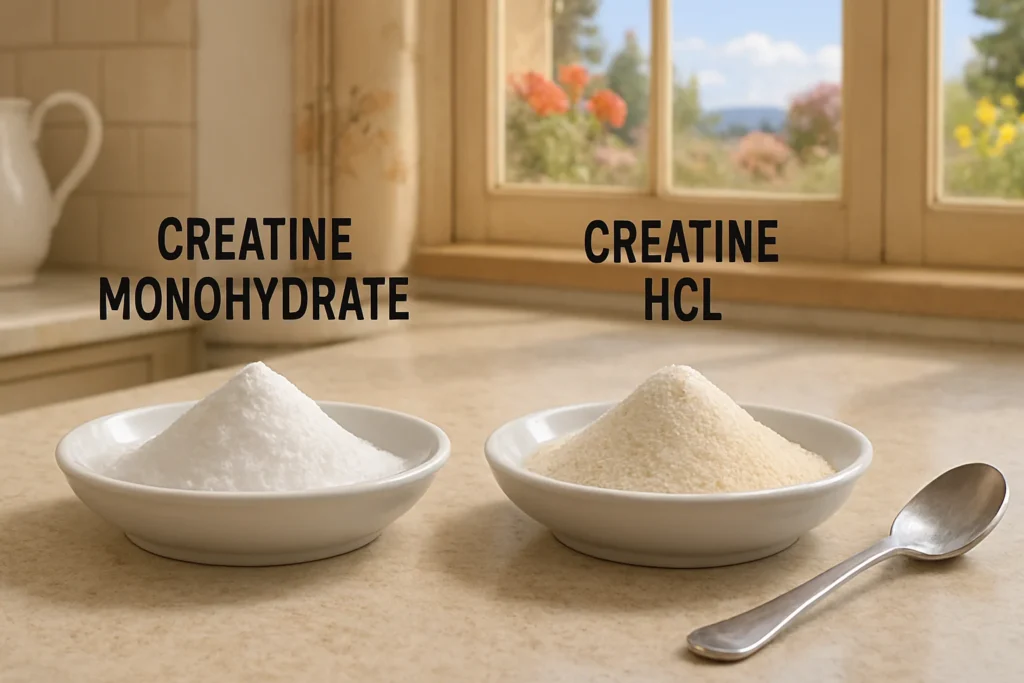
What is creatine monohydrate?
Creatine monohydrate is the most studied and widely used form of creatine on the market. It’s produced through a controlled chemical reaction, during which a water molecule naturally binds to creatine during crystallisation. This stable, bioavailable form is what you see in supplement tubs — and it’s the version that’s stood the test of time in both research and real-world use.
Why it’s popular:
- Extensively researched with proven results for strength, power, and muscle growth.
- Affordable and widely available in Australia.
- Safe for long-term use in healthy adults when taken at recommended dosages.
Many athletes use a loading phase of 20g per day for 5–7 days (split into 4 doses) before moving to a maintenance dose of 3–5g per day. However, a no-loading approach by simply taking 3–5g daily is equally effective over time.
What is creatine HCL?
Creatine HCL (creatine hydrochloride) is a newer form of creatine that binds creatine to a hydrochloride molecule. This makes it more water-soluble, which may improve absorption and reduce the amount needed.
Why some prefer it:
- More soluble, meaning it dissolves easily in water.
- Often taken in smaller doses (around 1–2g daily).
- Some users report less bloating or stomach discomfort compared to monohydrate.
It’s worth noting that while creatine HCL is gaining popularity, it doesn’t yet have the same large-scale scientific evidence as creatine monohydrate.
Comparing Creatine monohydrate vs Creatine HCL
1. Effectiveness
Creatine monohydrate has decades of research showing clear benefits for strength, power, and muscle mass. Creatine HCL is believed to work similarly, but lacks the same volume of studies. Most available evidence suggests both can be effective, though monohydrate has the stronger research base.
2. Dosage
- Monohydrate: Typically 3–5g daily after an optional loading phase.
- HCL: Usually 1–2g daily, thanks to higher solubility.
3. Digestive comfort
Some people experience mild bloating or water retention with monohydrate, especially during loading. HCL’s smaller serving size and better solubility may reduce this effect for sensitive users. So this is definitely something to consider when comparing Creatine monohydrate vs Creatine HCL.
4. Price and availability
Creatine monohydrate is generally cheaper and found in nearly every supplement store in Australia. Creatine HCL can cost more per serve and is stocked by fewer retailers in powder form.
So another reason why in the Creatine monohydrate vs Creatine HCL battle Creatine monohydrate wins.
Which one should you choose?
If you want a cost-effective, proven, and widely available option, creatine monohydrate is hard to beat. It’s been shown to work for most athletes when taken consistently, and the price point makes it an easy long-term addition to your supplement stack.
If you’ve tried monohydrate before and experienced digestive discomfort, creatine HCL could be worth testing to try and alleviate the discomfort. You’ll take less per serve, and it mixes easily with water without grittiness.
How to take creatine for best results
- Stay consistent — whether using monohydrate or HCL, daily use is key.
- Pair with carbs and protein — taking creatine with a post-workout shake or meal may improve uptake.
- Stay hydrated — creatine draws water into your muscles, so extra fluids are important.
- Cycle or not? — most research shows there’s no need to cycle off creatine unless advised by a health professional.
The key here in Creatine monohydrate vs Creatine HCL is finding something that works for you, your body type, the type of training you do and your general day to day habits.
Shop Creatine on Amazon
Top Creatine Picks
Just click on the purple highlighted text to take you to Amazon to explore Creatine Monohydrate vs Creatine HCL. Remember to check serving sizes and reviews to find the best fit for your training needs and also that suits your financial situation.
- Creatine Monohydrate – The classic, research-backed choice for strength, power, and endurance.
- Creatine HCL – Ultra-soluble, lower-dose option for easier digestion.
As an Amazon Associate, I earn from qualifying purchases, which helps support the content we create for you.
Frequently asked questions
Is creatine safe to take every day?
Yes, creatine is safe for most healthy adults when taken in recommended doses. Long-term studies show no harmful effects on kidney or liver health in people without pre-existing conditions. Always follow serving guidelines and speak with your healthcare provider if you have any concerns.
Do I need to cycle off creatine?
No, there’s no need to cycle off creatine. Many athletes take it year-round to maintain muscle saturation and performance benefits. That said, some people choose to pause during off-seasons or deload weeks.
Which is better for bulking — Creatine monohydrate vs Creatine HCL?
Both can support muscle growth by improving training performance and recovery. Creatine monohydrate is the most studied and cost-effective, while creatine HCL may be preferred by those who want a smaller serving size or have digestive sensitivities.
Can creatine cause bloating?
Some people experience mild water retention with creatine monohydrate during the initial loading phase. Creatine HCL is less likely to cause bloating because it’s absorbed more efficiently, but the effect is usually temporary and generally not harmful.
Do I need a loading phase with creatine?
A loading phase (about 20g per day for 5–7 days) can help you saturate your muscles faster, but it’s optional. Many people simply take the daily maintenance dose (3–5g for monohydrate, 1.5–2g for HCL) and reach saturation in 3–4 weeks.
Key takeaways in the Monohydrate vs HCL debate
For most people, creatine monohydrate is the go-to choice. It’s affordable, widely available, and backed by decades of proven results. That said, creatine HCL can be a solid alternative for those with sensitive stomachs or anyone who prefers a smaller daily dose.
Whichever you choose in the battle for supremacy between Creatine monohydrate vs Creatine HCL, remember — supplements work best when paired with a balanced diet, a well-structured training program, and adequate recovery.
Take creatine consistently, track your progress, and you’ll quickly see why creatine remains a staple for athletes worldwide.
