
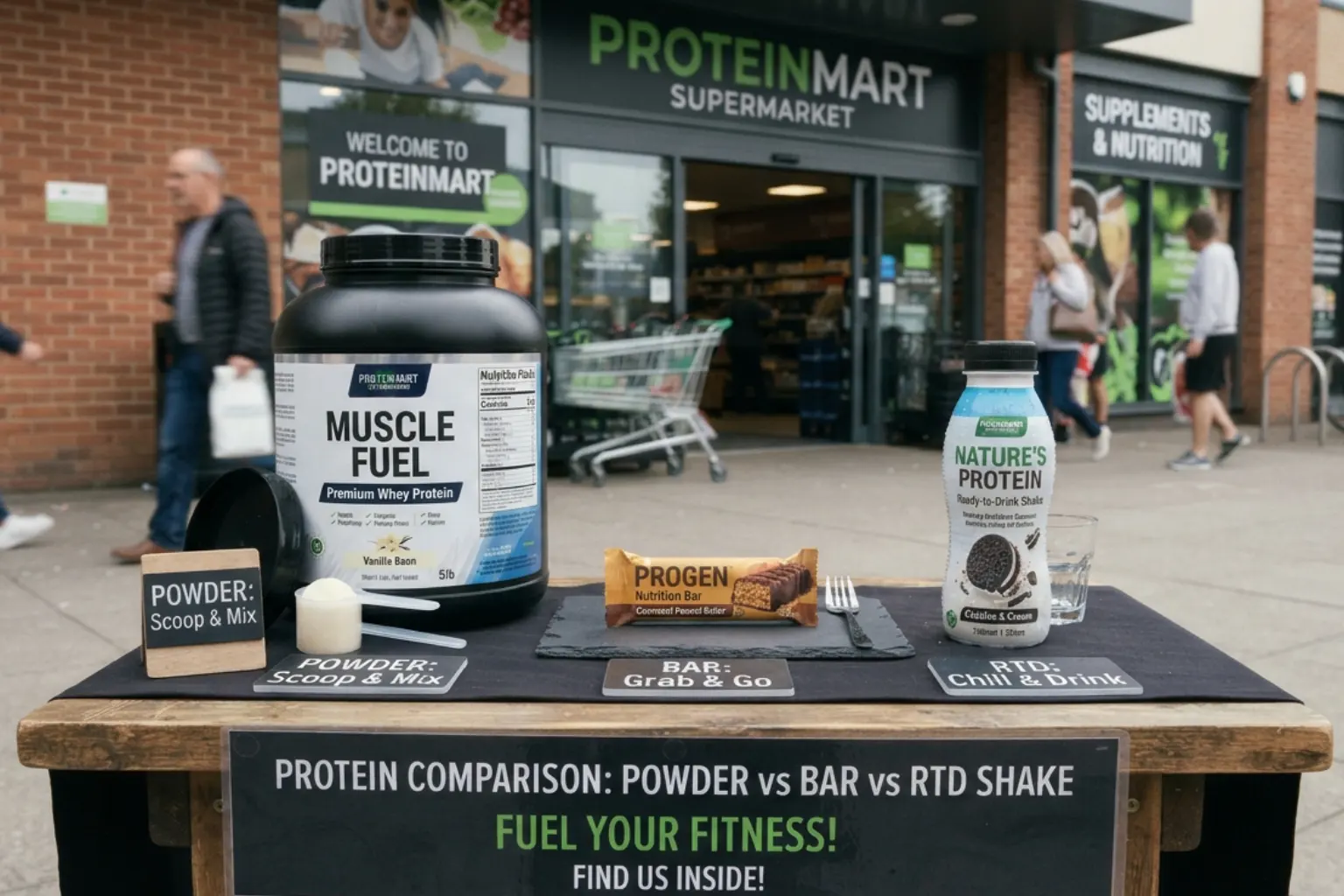

You are standing in the supplement aisle or scrolling an online supplement store, and every protein product promises you 20 grams of protein or more. What do you do? Choosing between protein powders vs bars vs ready to drink shakes feels harder than it should at times, because they all look like they do the same job.
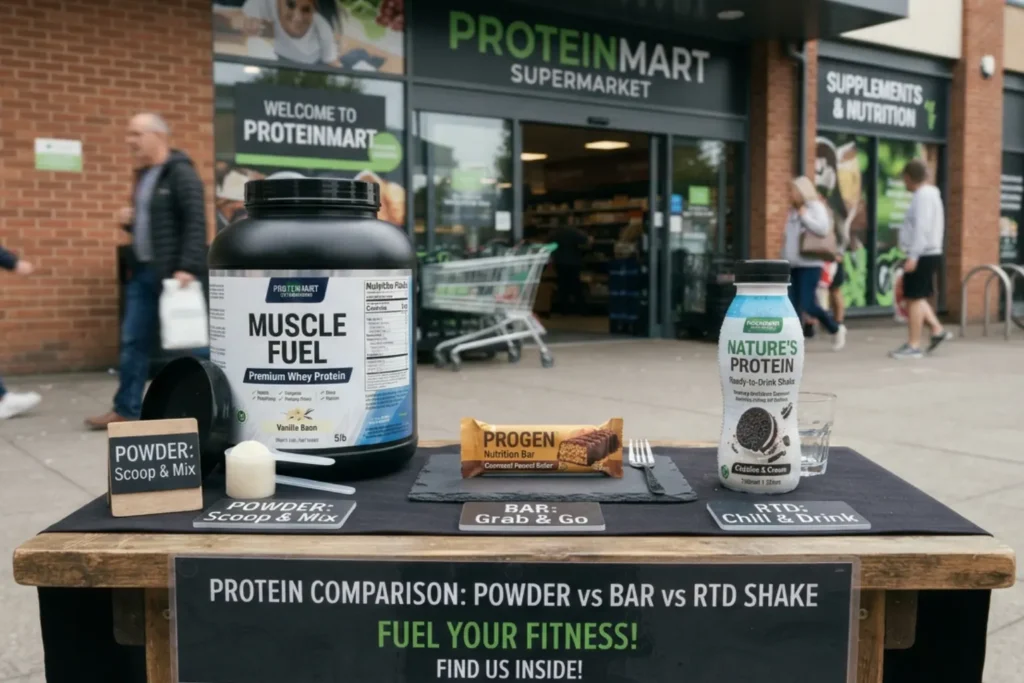
They do share one goal, which is getting more quality protein into your day. The difference comes down to how you live. A tub on the kitchen bench suits a different person than a protein bar in a work bag or a RTD protein bottle in the gym fridge.
This guide shows you how each of these protein formats work, where they may fall short and how to match them to your routine.
What you will learn
Here is what this guide covers so you can jump to the part that matters most to you.
- How much protein you need per serve, based on the International Society of Sports Nutrition (ISSN).
- How protein powders vs bars vs ready to drink shakes compare on cost, convenience and nutrition.
- Which format suits your goal, schedule and ultimately, your budget.
- What tested athletes need to know before they buy protein supplements (you have to be aware).
Read through this Ultimate Guide to Protein Powders vs Bars vs Ready to Drink Shakes, and you will finish with a clear protein winner for your own routine.
Start with the job your protein has to do
Think of the protein format as the delivery truck and the protein as the cargo. The total protein amount that arrives each day matters far more than the truck. This is how you’ll choose between protein powders vs bars vs ready to drink shakes for your day.
How much protein you need?
The ISSN position stand says a daily intake of 1.4 to 2.0 grams of protein per kilogram of body weight is sufficient for most exercising people. For a single serve, it suggests about 0.25 grams per kilogram or an absolute dose of 20 to 40 grams of high quality protein.
Take an 80 kilogram lifter. That works out to roughly 112 to 160 grams across the day and about 20 grams in a serve using the 0.25 rule. Once you know your protein number, choosing between protein powders vs bars vs ready to drink shakes becomes a question of logistics rather than magic.
Why whole food still comes first
The Australian Institute of Sport (AIS) warns that it is easy to rely on supplements to hit protein targets without realising the differences between foods and supplements. Treat protein powders vs bars vs ready to drink shakes as tools that fill gaps around eggs, dairy, meat, fish and legumes.
Protein powders: the flexible workhorse
A tub of protein powder gives you the most control. You choose the serve size, the liquid and whatever goes in the blender or protein shaker with it.
The AIS notes that whey protein concentrate is the cheapest form of whey and contains 70 to 80 percent protein by weight. It also describes isolated protein supplements as generally low in carbohydrate, fat and lactose.
- Control: You scoop exactly what you need and add milk, oats or banana when you want or need more energy.
- Value: Protein powders are usually the cheapest way to buy a gram of protein, though you should compare the price per serve.
- Catch: You need a shaker and liquid, and some cheaper protein tubs can clump or taste chalky.
If you train at home or near a kitchen, powders are hard to beat.
Protein bars: the grab and go option
A protein bar wins when your day has no gaps. You can throw one in a work bag and eat it in traffic without a shaker or a fridge.
The trade off sits in the label. The AIS notes that products like shakes and sports bars may create problems with energy balance and overall nutrient density of the diet. It also points out that soy protein is cheaper than whey and often added to protein bars.
- Check the protein: Look for a protein bar that reaches your serve target rather than a few grams dressed up with marketing.
- Check the kilojoules: A bar with a dessert sized energy count suits a hard bulk but not a cut.
- Check the ingredients: Sugar and syrups can turn a protein snack into a lolly bar.
Keep your protein bars for the moments protein powders cannot reach and they earn their spot in your bag. It’s handy to have if you’re travelling, and remember that a protein bar is a better option than having nothing at all.
Ready to drink shakes: the zero prep fix
A ready to drink shake removes every step. You grab it from the fridge, twist the cap and drink it on the walk to the car after training.
That convenience carries a price. Bottles weigh more than a scoop of powder, they take fridge space and they usually cost more per serve of protein too. They mostly suit people who skip protein altogether because prepping it feels like too much effort. But they can also sit in the place of being better than having nothing at all.
RTD Protein Shakes work best as a backup for busy days rather than your daily default.
Protein powders vs bars vs ready to drink shakes at a glance
This table below lines up the three formats side by side for you.
| Feature | Protein powder | Protein bar | Ready to Drink shake |
|---|---|---|---|
| Convenience | Needs a shaker and liquid | Open and eat anywhere | Open and drink |
| Portability | Light if pre-portioned | Excellent | Bulky and heavy |
| Cost per serve | Usually lowest | Often higher | Often higher |
| Watch for | Clumping and flavour fatigue | Kilojoules and sugar | Price and bottle waste |
| Best for | Home and daily routine | Work bags and travel | Post training in the car |
No single protein format wins every row, which is why most people end up using two of these options.
How to choose between protein powders vs bars vs ready to drink shakes
Start with your goal, then match the protein format to your schedule and budget.
If your budget is tight
Buy a protein powder tub. It usually costs the least per serve, and milk and fruit turn it into a full snack.
If your day is unpredictable
Keep a protein bar or a RTD protein shake as backup. The best protein is the one that’s in your hand when hunger hits.
If you compete in tested sport
Sport Integrity Australia says supplements not listed on its app carry more risk, and some cafes and shops prepare protein foods with unidentified ingredients. Its study with the AIS found that commercially manufactured protein fortified foods carry no extra risk of banned substances compared with other processed foods. Stick with batch tested products, athlete safe products and speak to a sports dietitian if needed. Check before you consume. Informed Sport and Hasta tested supplements are considered safe. You still need to check every time due to some supplement brands having one or two tested products, but not their full supplement range.
Pick the protein format that fits your next seven days, make sure it’s safe and you will use it consistently.
How this looks in real life
These example scenarios show how people put protein powders vs bars vs ready to drink shakes to work.
- The early starter: Jessie trains at 5am. She drinks a ready to drink shake from her gym bag in the car park so she never skips her post session protein fix.
- The uni student: Thomas blends one scoop of powder with milk and a banana after lectures. It costs less than a café smoothie.
- The busy parent: Maya keeps a protein bar in her handbag for the school pickup slump and checks the kilojoules so it works as a snack and not a second dessert for the day.
- The tested athlete: Samuel competes in a drug tested sport, so he only buys batch tested protein powders listed on the Sport Integrity app.
Each person uses a different protein format, and each one still hits their daily protein target.
FAQ
Are protein powders vs bars vs ready to drink shakes equal for building muscle?
Mostly yes. When the protein dose and your daily total match, the format matters far less than consistency. Bars and shakes can carry extra energy, so check the label against your goal.
Which format is cheapest per serve?
Powders usually win on price per serve. Compare the cost per serve at your favourite Australian retailer rather than the sticker price, since tub sizes vary.
Can I replace meals with bars or shakes?
You can use them occasionally, but the AIS cautions against relying on supplements in place of food. Build most meals from whole foods when possible.
Can I mix all three protein formats?
Absolutely. Many people use protein powders vs bars vs ready to drink shakes together, with a tub at home, a bar in the bag and a shake for emergencies.
Key takeaways
Here are the points to remember when you stand in front of the shelf.
- When weighing protein powders vs bars vs ready to drink shakes, aim for 20 to 40 grams of quality protein per serve and 1.4 to 2.0 grams per kilogram across the day.
- Protein powders usually deliver the best value and flexibility.
- Bars give you portability but need a close look at kilojoules and sugar.
- Ready to drink shakes remove all prep but usually cost more per serve.
- Tested athletes should choose batch tested products listed on the Sport Integrity app.
Final thoughts
The best choice between protein powders vs bars vs ready to drink shakes is the one that fits your day. Protein powder suits your kitchen, a protein bar suits your bag and a RTD protein shake suits the rush. Pick the format that removes friction from your routine, check the labels for protein and energy and keep whole foods at the centre of your plate. Start with one protein format this week and you will quickly see whether your protein routine feels easier.
