
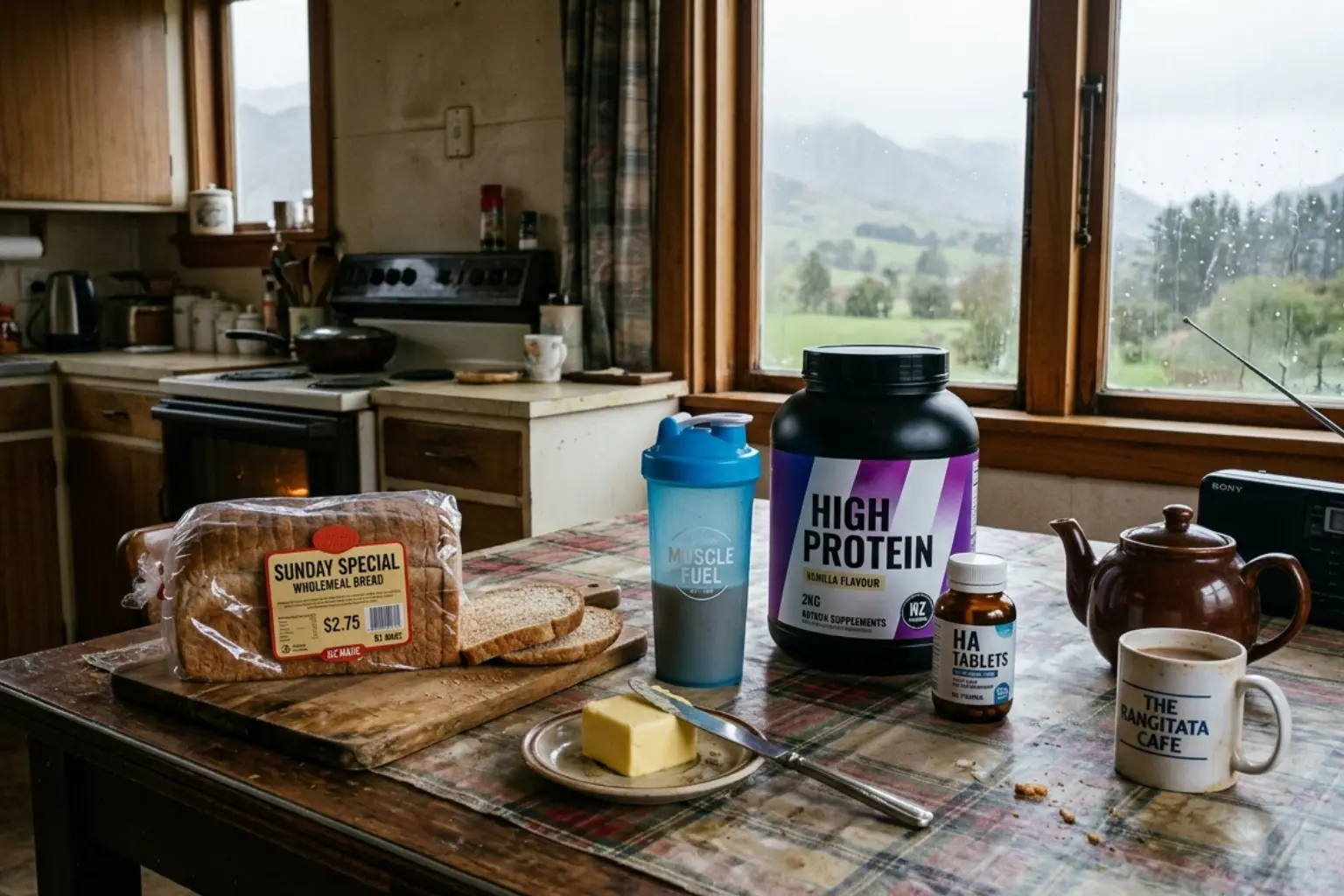

You might recognise the name from the ingredient list of your favourite face serum or moisturiser. However, a new trend is emerging in the Australian supplement market where this moisture magnet is making its way into high protein blends and recovery shakes. If you are wondering what is Hyaluronic Acid and why it belongs in your shaker bottle, you have come to the right place to understand more about this versatile molecule.
Hyaluronic Acid is no longer just a topical beauty secret. Athletes and fitness enthusiasts across Australia are now using it as an internal tool to support joint longevity and systemic hydration. As we demand more from our bodies during heavy lifting sessions or long endurance runs, the need for structural support becomes just as vital as muscle growth itself.

This guide deconstructs the biochemistry of Hyaluronic Acid, explains why manufacturers are now adding it to protein powder, and outlines how you can use it to maximise your physical performance and recovery.
What is Hyaluronic Acid?
Hyaluronic Acid, often abbreviated as HA, is a naturally occurring glycosaminoglycan found throughout the connective, epithelial, and neural tissues of your body. Think of it as a biological lubricant. It is a clear, gooey substance that your body produces to keep tissues well lubricated and moist. Scientists classify it as a humectant, meaning it possesses the incredible ability to retain moisture. In fact, a single gram of Hyaluronic Acid can hold up to six litres of water.
In the human body, the highest concentrations exist in your skin, inside your joint sockets, and within the vitreous fluid of your eyes. It acts as a shock absorber and a structural scaffold. While your body produces it daily, the natural production rate begins to decline as you age. This decline often leads to the physical creaking in joints and the loss of skin elasticity that many people experience in their thirties and beyond.
Most supplemental Hyaluronic Acid comes from two primary sources. Historically, scientists extracted it from rooster combs. However, modern Australian supplements almost exclusively use vegan friendly versions created through microbial fermentation. This process involves using specific bacteria to produce high purity HA that the human body can easily recognise and utilise. This transition to fermented sources ensures that even those on a plant based diet can access the benefits of this molecule without compromising their ethical standards.
Benefits of Hyaluronic Acid
The benefits of Hyaluronic Acid extend far beyond simple hydration. For the active individual, this ingredient serves as a multi functional tool for maintenance and performance.
- Superior Joint Lubrication: Hyaluronic Acid is a major component of synovial fluid. This fluid sits between your joints to prevent bones from grinding against each other. Supplementing with HA helps maintain the viscosity of this fluid, which reduces friction and discomfort during deep squats or long runs.
- Enhanced Skin Hydration: By increasing the moisture content of your skin from the inside out, HA helps reduce the appearance of fine lines and promotes a healthy, glowing complexion. This is particularly beneficial for Australians who spend significant time in the harsh sun.
- Faster Wound Healing: HA plays a critical role in the inflammatory response and tissue repair process. It helps regulate inflammation levels and signals the body to build more blood vessels in damaged areas, which may speed up the recovery of minor scrapes or soft tissue strains.
- Reduced Joint Pain: Clinical studies suggest that oral intake of Hyaluronic Acid can significantly decrease knee pain in people with osteoarthritis. For the lifter dealing with “achy knees,” this provides a non invasive way to manage discomfort.
- Eye Health Support: Since the eyes are rich in Hyaluronic Acid, many users report a reduction in dry eye symptoms when they maintain adequate levels through diet and supplementation.
How it works in the body
To understand how Hyaluronic Acid works, you have to look at the extracellular matrix. This is the glue that holds your cells together. HA acts as the primary filler in this matrix. When you consume HA in a supplement or protein powder, the body breaks it down into smaller molecules in the gut. These molecules then travel through the bloodstream to the tissues that need them most.
Once the HA reaches your joints, it stimulates the cells known as synoviocytes to produce more of your own natural Hyaluronic Acid. This process is known as endogenously stimulated production. It does not just provide a temporary fix, it encourages your body to improve its own internal environment. The presence of HA also helps to inhibit certain enzymes that break down cartilage, effectively acting as a shield for your joints.
On a cellular level, HA binds to a receptor called CD44. This binding process helps regulate cell migration and helps the body manage the repair of damaged tissues. For an athlete, this means that the micro tears caused by intense training are handled more efficiently by the immune system and the structural repair mechanisms of the body. It is a subtle but powerful shift in how your body manages daily wear and tear.
Why is it in Protein Powder?
The supplement industry in Australia is shifting toward a more holistic view of recovery. While whey protein or collagen provides the raw amino acids needed for muscle repair, Hyaluronic Acid offers a complementary benefit by addressing the connective side of the equation. When you see Hyaluronic Acid in a protein powder, the goal is usually twofold, to help enable joint protection and skin health.
Protein powders, particularly those featuring collagen peptides, work exceptionally well alongside Hyaluronic Acid. While the protein provides the building blocks for tissue, the Hyaluronic Acid ensures those tissues stay hydrated and resilient. Imagine a sponge. The protein provides the structure of the sponge, but the Hyaluronic Acid provides the water that keeps the sponge soft and functional. Without adequate moisture, your connective tissues become brittle and prone to injury.
By including HA in a post workout protein shake, brands are targeting the athlete who wants to look as good as they perform. This beauty from within approach acknowledges that physical training is a stressor on the whole body, not just the muscles. Providing your system with the tools to maintain hydration at a cellular level helps you bounce back faster from high impact activities like rucking or sprinting.
I you are looking for a protein powder with HA in it, you can find some here – Buy Hyaluronic Acid Protein Powder
As an Amazon Associate, I earn from qualifying purchases, which helps support the content we create for you.
Supplement types and sensory profile
When looking for Hyaluronic Acid in Australia, you will encounter it in several different formats. Each has its own set of advantages depending on your lifestyle and how you prefer to manage your supplement stack.
Supplement Formats
- Capsules and Tablets: This is the most common way to find HA as a stand alone supplement. They offer precise dosing, usually ranging from 50mg to 150mg per pill. This format is ideal for those who want to keep their joint support separate from their protein intake. Buy Hyaluronic Acid Tablets here
- Stand Alone Powder: You can find pure HA powder, though it is less common for individual retail. It is a very fine, white powder. Because the effective dose is so small (often just a tiny scoop), it can be difficult to measure accurately without a milligram scale. Buy Hyaluronic Acid Powder here
- Mixed Recovery Powders: You will increasingly find HA pre mixed into collagen powders or beauty protein blends. This is the most convenient way to consume it as the manufacturer has already balanced the dosage with other synergistic ingredients like Vitamin C and Zinc. Buy Hyaluronic Acid Recovery Powders here
- Liquid Shots: Some premium brands offer liquid versions of Hyaluronic Acid, often combined with electrolytes. These are designed for rapid absorption and are often marketed toward those with severe joint discomfort. Buy Hyaluronic Liquid Shots here
As an Amazon Associate, I earn from qualifying purchases, which helps support the content we create for you.
Taste and Texture
By itself, Hyaluronic Acid is virtually tasteless. It does not have the bitterness of certain amino acids or the metallic tang of some minerals. If you were to mix pure HA powder into water, you would not notice a flavour change. However, you would notice a significant change in texture. Because it is a powerful humectant, it can make a liquid feel slightly thicker or more viscous. When it is mixed into a protein powder, this actually works in your favour by contributing to a creamier mouthfeel without the need for extra fats or thickeners.
Typical dosage and timing
The effectiveness of Hyaluronic Acid depends heavily on consistent dosing. Unlike a pre workout caffeine hit, you will not feel the effects of HA immediately. It builds up in your system over several weeks.
| Goal | Recommended Daily Dosage | Best Time to Take |
| General Skin Health | 120mg to 150mg | With a meal or in your morning shake |
| Joint Pain Management | 200mg to 240mg | Consistently at the same time daily |
| Athletic Recovery | 150mg to 200mg | Post workout with your protein shake |
| Maximum Hydration | 200mg plus | Spread across two doses (AM and PM) |
Most high quality Australian protein powders that include HA will provide roughly 100mg to 150mg per serve. If you are using it specifically for joint issues, you might need to look for a dedicated supplement to reach the higher end of the clinical dosage range. Always ensure you drink plenty of water when taking HA, as the molecule requires water to perform its primary function of hydration.
Possible side effects and safety
Hyaluronic Acid is remarkably safe for the vast majority of people. Because your body already produces it, the risk of an allergic reaction or an adverse metabolic response is extremely low. Unlike some botanical extracts that might interfere with hormones or heart rate, HA is a structural component that the body generally treats as a familiar nutrient.
However, some users may experience mild digestive upset or bloating if they take very high doses on an empty stomach. This is why many manufacturers recommend including it in a protein shake or taking it with a meal.
Always consult a healthcare professional before starting new supplements.
If you are pregnant or breastfeeding, the data on oral Hyaluronic Acid supplementation is limited. While it is likely safe due to its natural occurrence in the body, it is always best to check with your GP to ensure it fits your specific health profile.
FAQ Section
Is Hyaluronic Acid vegan?
Yes, most modern supplements use Hyaluronic Acid derived from bacterial fermentation rather than animal sources. However, you should always check the label, as some older or cheaper formulations may still use rooster combs.
How long does it take to see results?
For skin hydration, users often notice a difference within four to six weeks of daily use. For joint pain and mobility, clinical data suggests that eight to twelve weeks of consistent supplementation is required to see significant improvements.
Can I take Hyaluronic Acid with Creatine?
Absolutely. There are no known negative interactions between HA and Creatine. In fact, because Creatine also pulls water into the muscle cells, taking both can help ensure your body remains optimally hydrated from multiple angles.
Does it survive the digestion process?
Yes. While some early critics argued that the molecule was too large to be absorbed, modern research has shown that oral Hyaluronic Acid is effectively broken down into smaller fragments that can be absorbed by the gut and redistributed to the skin and joints.
Will it make my skin oily?
No. Hyaluronic Acid regulates moisture, not oil. It helps the skin retain water, which can actually help balance oil production. When your skin is dehydrated, it often overproduces oil to compensate, so HA can actually help those with oily or combination skin types.
Our Verdict on Hyaluronic Acid
Hyaluronic Acid is a fantastic addition to any Australian athlete’s supplement regime. It bridges the gap between looking good and feeling physically resilient. If you are someone who pushes their body through high intensity training, the joint protection alone makes it worth considering.
When you find it in a protein powder, it is a sign that the brand is thinking about your long term health, not just your immediate muscle gains. We recommend starting with a combined collagen and HA powder to get the most bang for your buck in terms of connective tissue support.
