


Beginners guide to protein is one of the most important starting points for anyone new to training or looking to improve their diet. Protein is essential for muscle growth, recovery, and overall health, but figuring out how much you really need can be confusing, especially with all the conflicting advice online.
This guide simplifies everything, from why protein matters to how much to eat daily, what sources to choose, and how to structure your meals. Whether you’re new to the gym, looking to lose weight, or just wanting to improve your overall nutrition, you’ll find practical tips here to make protein easy and sustainable.
What is protein and why is it important?
Protein is one of the three main macronutrients, alongside carbohydrates and fats. It plays a vital role in building and repairing muscles, producing hormones and enzymes, and maintaining a healthy immune system. For anyone who exercises, getting enough protein is especially important because it helps muscles recover and grow stronger after training sessions.
When you don’t get enough protein, recovery slows down, muscle growth stalls, and fatigue can set in. For beginners, learning how much protein to eat from the start helps prevent these issues and keeps progress on track.
How much protein do beginners need?
For active people and those starting a training program, the general recommendation is 1.6–2.2 grams of protein per kilogram of body weight per day. For example:
- If you weigh 70 kg, aim for 112–154 g of protein daily.
- If you weigh 90 kg, aim for 144–198 g of protein daily.
Beginners can start at the lower end of the range and adjust as training intensity increases. If your goal is fat loss while maintaining muscle mass, it’s often beneficial to aim for the higher end of the scale.
Choose quality protein sources
- Animal-based: Chicken breast, turkey, beef, pork, fish, eggs, and dairy (milk, yoghurt, cottage cheese).
- Plant-based: Lentils, chickpeas, tofu, tempeh, edamame, seitan, quinoa, nuts, and plant-based protein powders.
Spread protein evenly across meals
Eating 20–40g of protein per meal helps maximise muscle protein synthesis throughout the day. Rather than eating most of your protein in one meal, spread it across breakfast, lunch, dinner, and snacks.
Use protein supplements if needed
Protein powders aren’t essential, but they are convenient for busy people. Whey protein, casein, or plant-based blends are easy to add to shakes, oats, and baking. For many beginners, one scoop of protein powder per day can help fill nutritional gaps without needing major meal changes.
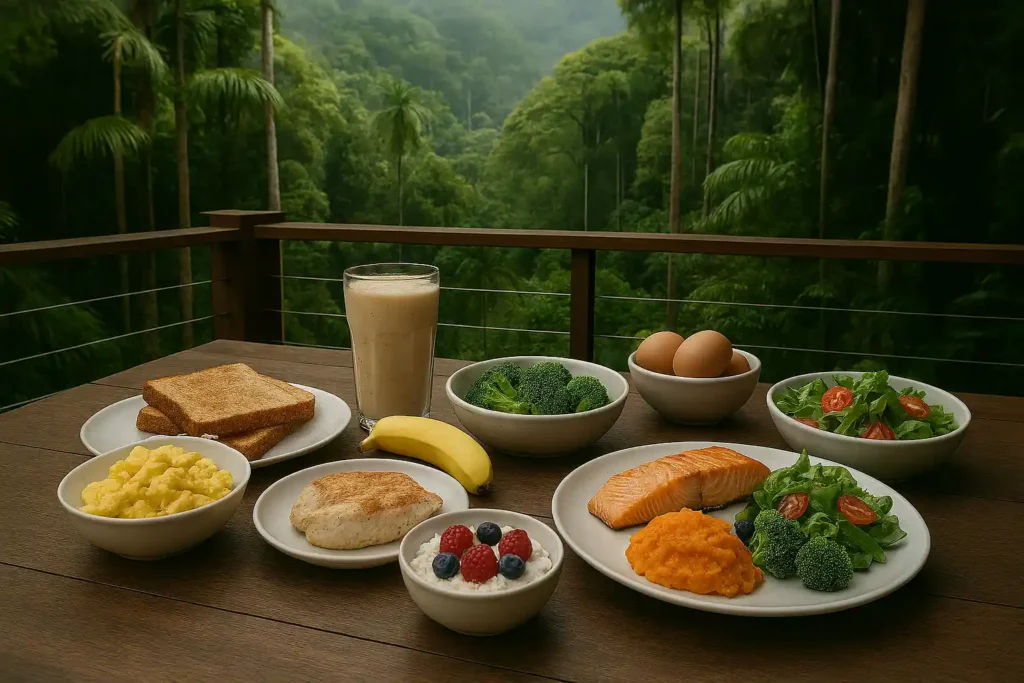
Sample High-Protein Meal Plan
Breakfast (30–40g protein):
- 3 scrambled eggs (18g protein)
- 150 g Greek yoghurt (12g protein)
- 2 slices wholegrain toast
Snack (20–25g protein):
- Protein shake made with 30g whey protein (20–24g protein)
- 1 banana
- Almond milk or water
Lunch (35–40g protein):
- 150 g chicken breast (35g protein)
- 1 cup brown rice
- 1 cup steamed broccoli
Snack (20g protein):
- 200g cottage cheese or high-protein yoghurt
- Handful of berries
Dinner (40–45g protein):
- 200g salmon or lean beef (40–45g protein)
- Sweet potato mash
- Green salad with olive oil dressing
Total daily protein: ~155–170g (adjust portions for your body weight and goal)
Tips and common mistakes to avoid
- Not tracking intake: Beginners often underestimate or overestimate protein intake. Try a tracking app for a week to get familiar with how much you’re actually eating.
- Over-relying on supplements: Shakes are convenient but whole food sources should always come first.
- Skipping protein at breakfast: Starting your day with protein helps regulate hunger and supports muscle recovery from morning training sessions.
- Focusing on protein only: Carbohydrates and fats are also essential for energy, hormones, and recovery — don’t cut them out entirely.
FAQs
Do I need protein shakes to build muscle?
No. Shakes are convenient but not essential. Focus on getting your protein from whole foods first, and use supplements only to fill gaps.
Can too much protein harm your kidneys?
For healthy people, there is no evidence that high protein intake harms kidney function. If you have a pre-existing kidney condition, consult a medical professional before increasing protein intake.
Is plant protein as good as whey protein?
Yes, especially when you combine different plant proteins (like pea and rice) to ensure all essential amino acids are included.
Bottom line
Getting enough protein is one of the easiest ways to improve your recovery, build muscle, and maintain overall health. Beginners don’t need complicated meal plans or expensive supplements — just start by hitting your daily protein target with simple, whole-food meals and add a supplement only if necessary.
Even small changes, like adding an extra egg to breakfast or swapping an afternoon snack for Greek yoghurt or a protein shake, can make a noticeable difference in recovery and performance.
Want more beginner-friendly nutrition tips? Check out more guides here at Protein Guy and build the knowledge you need to support your training goals.
