
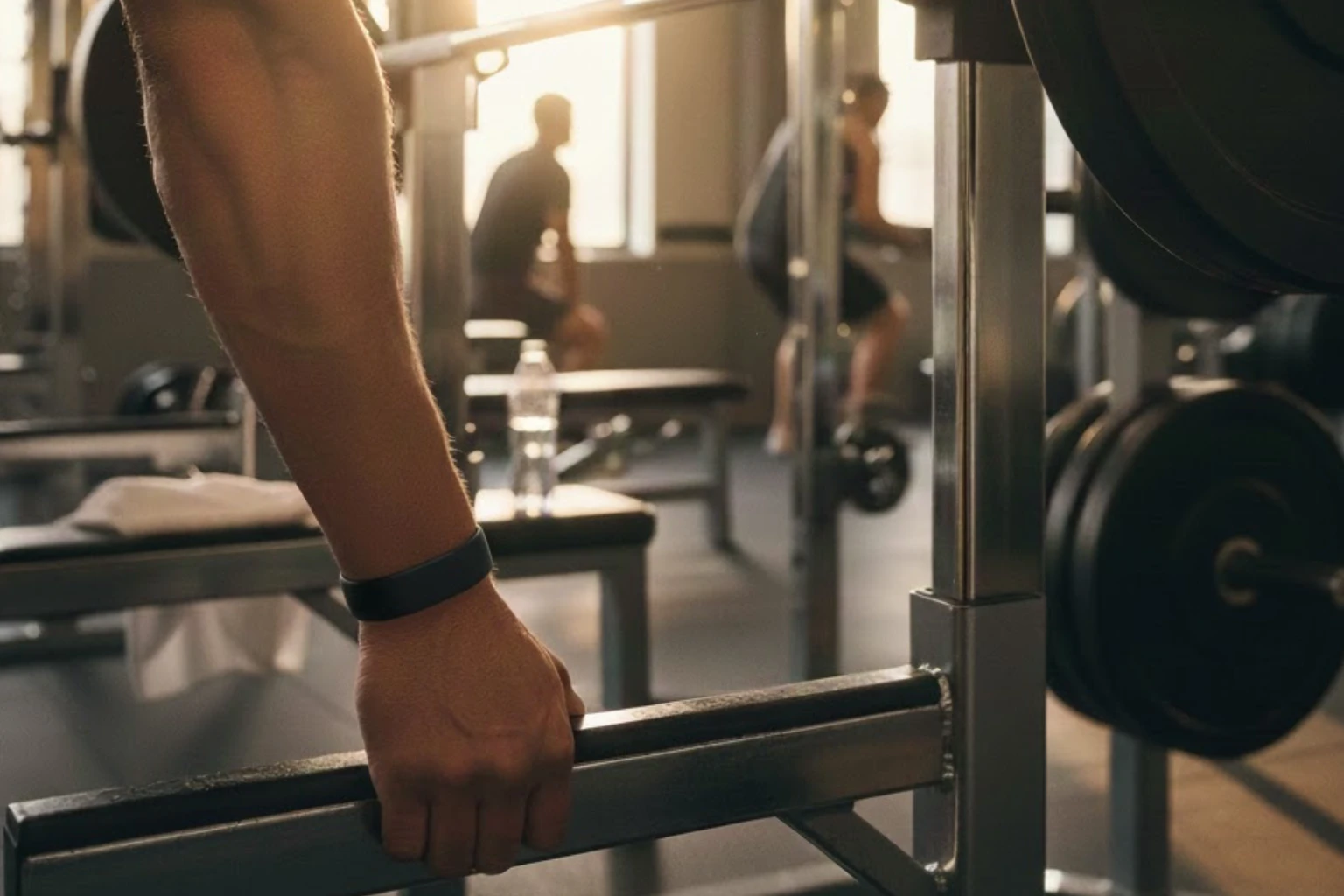

You have spent hundreds on high quality whey isolate, perfected your creatine timing, and haven’t missed a leg day in months. But how do you actually know if your body is recovering fast enough to grow? This is where choosing the best fitness wearables enters the equation.
In the past, gym goers relied on “feel” to decide if they should hit a PB or take a rest day. Today, we have data. Fitness wearables have evolved beyond simple step counters. The best devices now measure the physiological markers that matter to lifters: Heart Rate Variability (HRV), sleep architecture, and nervous system strain.
If you are serious about your performance, a wearable is the dashboard for your body. Here is our no-nonsense guide to the top 15 wearables for 2026, categorised by how you actually train.
Ready to Optimise Your Training?
If you are serious about seeing results, you cannot afford to leave your recovery to chance. Don’t waste another session guessing your stats. We have made it easy to secure your gear; every entry on our Best Fitness Wearables 2026 list includes a direct link to the official Amazon page. Select your tracker, add it to your cart, and lock in your order now to start training with precision!
Quick Comparison: Top Picks for 2026
| Wearable | Best For | Battery Life | Key Perk |
| Whoop 5.0 | Minimalist Recovery | 5 to 14 Days | No screen, high focus on “Strain” |
| Garmin Fenix 8 | All Round Performance | Up to 29 Days | Incredible durability & mapping |
| Oura Ring 4 | Sleep & Lifestyle | 8 Days | Discreet ring form factor |
| Fitbit Charge 6 | Budget & Simplicity | 7 Days | Google app integration |
| Apple Watch Ultra 3 | iPhone Power Users | 36 to 72 Hours | Best app ecosystem |
1. The Big Three for Bodybuilders
These devices prioritise recovery and “readiness” scores over GPS and running metrics. They are designed to stay out of the way while you lift.
Whoop 5.0
The gold standard for athletes who want data without a distracting screen. Whoop focuses on two main scores: Strain and Recovery.
- Key Specs: Waterproof (IP68), Bluetooth HR broadcast, no screen.
- Pros: Extremely lightweight; “Strength Trainer” tracks muscular load, not just cardio.
- Cons: Requires a monthly subscription; no GPS for runners.
- Protein Guy Tip: Use the Whoop journal to track how different protein blends or magnesium supplements affect your “Green” recovery scores.
If you’re looking at buying a Whoop or need more information, you can here – Buy Whoop 5.0
Oura Ring 4
A sleek titanium ring that packs medical grade sensors. It is arguably the best sleep tracker on the market.
- Key Specs: Titanium build, water resistant to 100m, 8 day battery.
- Pros: Most comfortable to wear 24/7; excellent at detecting early signs of overtraining.
- Cons: Subscription required for full data; can get scratched by knurled barbells.
- Keep in Mind: We recommend wearing a silicone cover or “ring protector” during heavy deadlifts to avoid scratching the finish.
Want to buy an Oura Ring, you can here – Buy Oura Ring 4
Ultrahuman Ring Air
The primary rival to Oura, notable for its lack of a monthly subscription fee.
- Key Specs: 2.4g weight, fighter jet grade titanium, 6 day battery.
- Pros: No subscription; features a “Caffeine Window” tool to help time your pre-workout.
- Cons: App interface is slightly more complex than Oura.
- Protein Guy Tip: The caffeine tracking is a game changer for ensuring your 4pm pre-workout doesn’t ruin your 10pm recovery window.
Looking for a Ultrahuman Ring Air, you can get one here – Buy a Ultrahuman Ring Air
As an Amazon Associate, I earn from qualifying purchases, which helps support the content we create for you.
2. Best Fitness Wearables for Data Nerds & Powerlifters
If you want to see your rest timers, rep counts, and local maps on your wrist, these high performance watches are built for the grind.
Garmin Fenix 8
This is the “Tank” of the wearable world. It is virtually indestructible and packed with every metric imaginable.
- Key Specs: AMOLED or Solar options, 10 ATM water rating, built in LED flashlight.
- Pros: Top tier GPS; dedicated strength training profiles with muscle heat maps.
- Cons: Expensive; bulky on smaller wrists.
Are you ready for a Garmin Fenix? You can get your hands on one here – Buy Garmin Fenix 8
Coros Apex 2 Pro
A favourite for those who want Garmin level data without the Garmin price tag.
- Key Specs: Sapphire glass, titanium bezel, 30 day regular battery life.
- Pros: Physical dial is easy to use with sweaty hands; incredibly fast GPS lock.
- Cons: Sleep tracking isn’t quite as deep as Whoop or Oura.
The Coros Apex is a very stylish fitness wearable, you can purchase one here – Buy Coros Apex 2 Pro
Samsung Galaxy Watch 8
The top choice for Android users, featuring new AI driven wellness insights for 2026.
- Key Specs: Wear OS 6, BioActive Sensor, 2 to 3 day battery.
- Pros: “Energy Score” gives a daily breakdown of physical readiness; excellent build quality.
- Cons: Battery life still lags behind dedicated sports watches.
Does this Samsung Watch suit your training and goals? Buy it here – Samsung Galaxy Watch 8
Garmin Epix Pro (Gen 2/3)
Similar to the Fenix but with a stunning AMOLED display that makes your gym stats pop.
- Key Specs: Sapphire lens, heart rate sensor (Elevate V5), built in flashlight.
- Pros: Best in class screen; includes “Endurance Score” to track long term stamina.
- Cons: Very high price point.
Rounding off the Data Nerds and Powerlifters section is the Garmin – Buy the Garmin Epic Pro here
As an Amazon Associate, I earn from qualifying purchases, which helps support the content we create for you.
3. The Hybrid Athletes
For those who follow a “functional fitness” approach, combining heavy lifting with endurance work.
Apple Watch Ultra 3
The ultimate smartwatch for iPhone users who actually train hard.
- Key Specs: 3,000 nit display, dual frequency GPS, 36 hour battery.
- Pros: Best app support (syncs perfectly with MyFitnessPal); rugged enough for diving or rucking.
- Cons: Only works with iPhone; needs frequent charging.
Does the Apple Watch suit your training routine, if YES, you can get one here – Buy Apple Watch Ultra 3
Garmin Forerunner 970
The “Lighter Fenix.” It has almost all the same features but in a lightweight plastic housing.
- Key Specs: Built in mapping, 15 day battery, multi band GPS.
- Pros: “Training Readiness” score is perfect for balancing lifting and running.
- Cons: Lacks the premium metal feel of the Fenix.
Looking to purchase the Garmin Forerunner, you can pick one up here – Buy Garmin Forerunner 970
Suunto Race S
A sleek, European designed watch that offers incredible value for high end performance.
- Key Specs: 1.32 inch AMOLED screen, 30 hour GPS battery, 50m water resistance.
- Pros: Very responsive interface; great “Recovery Time” estimates.
- Cons: The app ecosystem is smaller than Garmin or Apple.
Lots of colours to choose from in the Suunto Race range, pick one that suits here – Buy Suunto Race S
As an Amazon Associate, I earn from qualifying purchases, which helps support the content we create for you.
4. Budget Kings
You don’t need to spend a thousand dollars to get great data. These options leave more room in your budget for your supplement stack.
Fitbit Charge 6
The most popular tracker for a reason. It is simple, reliable, and integrates with Google apps.
- Key Specs: Built in GPS, heart rate tracking, 7 day battery.
- Pros: “Daily Readiness Score” is very accurate; small enough to forget you’re wearing it.
- Cons: Some detailed metrics are locked behind a “Fitbit Premium” paywall.
Fitness wearable a great price, order your Fitbit Charge here – Buy Fitbit Charge 6
Coros Pace 4
The best value for money for any athlete who cares about weight and GPS.
- Key Specs: 30g weight, dual frequency GPS, 20 day battery.
- Pros: Unbeatable price for the features; excellent web dashboard for data analysis.
- Cons: No touch screen (dial only).
On a budget, the Coros Pace gives you everything you need for at a great price point – Buy Coros Pace 4
Xiaomi Smart Band 10
The absolute cheapest way to get heart rate and sleep data on your wrist.
- Key Specs: 1.62 inch AMOLED, 21 day battery, 5 ATM water resistance.
- Pros: Ridiculously cheap; tracks 150+ different sports.
- Cons: The app can be a bit clunky; heart rate accuracy is lower during high intensity lifting.
A stylish vibe all your friends will notice, get a Xiaomi Smart Band here – Xiaomi Smart Band 10
Amazfit Active
A stylish, Apple Watch lookalike that actually has decent health tracking.
- Key Specs: 1.75 inch AMOLED, 14 day battery, AI fitness coach.
- Pros: Great screen for the price; includes basic readiness metrics.
- Cons: GPS can be slightly hit or miss in built up city areas.
Great looking fitness wearable, outstanding price point – Buy an Amazfit Active watch here
Garmin Vivosmart 5
The minimalist’s Garmin. No GPS, but it tracks the essentials.
- Key Specs: Small OLED screen, 7 day battery, stress tracking.
- Pros: Very slim; syncs with the powerful Garmin Connect app.
- Cons: No built in GPS (uses your phone).
The Garmin Vivosmart is a smart looking slimline fitness wearable – Buy Garmin Vivosmart 5
As an Amazon Associate, I earn from qualifying purchases, which helps support the content we create for you.
Performance FAQ: Wearables & Muscle Growth
Does a fitness tracker actually help build muscle?
A tracker doesn’t lift the weights for you, but it monitors your Recovery. Muscle isn’t built in the gym; it’s built while you sleep. By tracking your HRV and sleep quality, you can ensure you are giving your body the rest it needs for protein synthesis to occur.
Which is more accurate: Wrist or Ring?
For sleep and resting heart rate, rings (Oura/Ultrahuman) are incredibly accurate because the skin on your finger is thinner. For high intensity lifting, a chest strap paired with a watch (Garmin/Apple) is still the gold standard, as wrist sensors can struggle with “grip squeeze” during heavy sets.
Do I need to pay for a subscription?
It depends. Whoop and Oura require monthly fees to see your data. Garmin, Coros, and Ultrahuman are “one and done” purchases with no hidden costs. Make sure to check before you buy.
The Protein Guy Verdict
Choosing a wearable is about matching the tool to your training style.
- If you are a pure bodybuilder, go for the Whoop 5.0. The absence of a screen keeps you focused, and the recovery data is elite.
- If you are a Hybrid Athlete who runs and lifts, the Garmin Fenix 8 is the best investment you’ll ever make.
- If you just want the basics for the lowest price, the Fitbit Charge 6 is your winner.
Data is only useful if you act on it. Use these devices to find the “sweet spot” in your training volume, and you’ll see that they’ll help your gains accelerate faster than ever.
I hope you’ve enjoyed learning more about fitness trackers and fitness wearables, make sure to do your research to choose the correct one for your training goals and lifestyle as one size does not fit all. Thanks or dropping by, you might want to see what protein powder suits you the best next, you can here.
